Garage floor concrete in Santa Maria CA - a floor that stays flat and tough
Cracked, sunken or dusty garage slab? We tear it out and pour a new floor on a hard-packed base that stays flat.
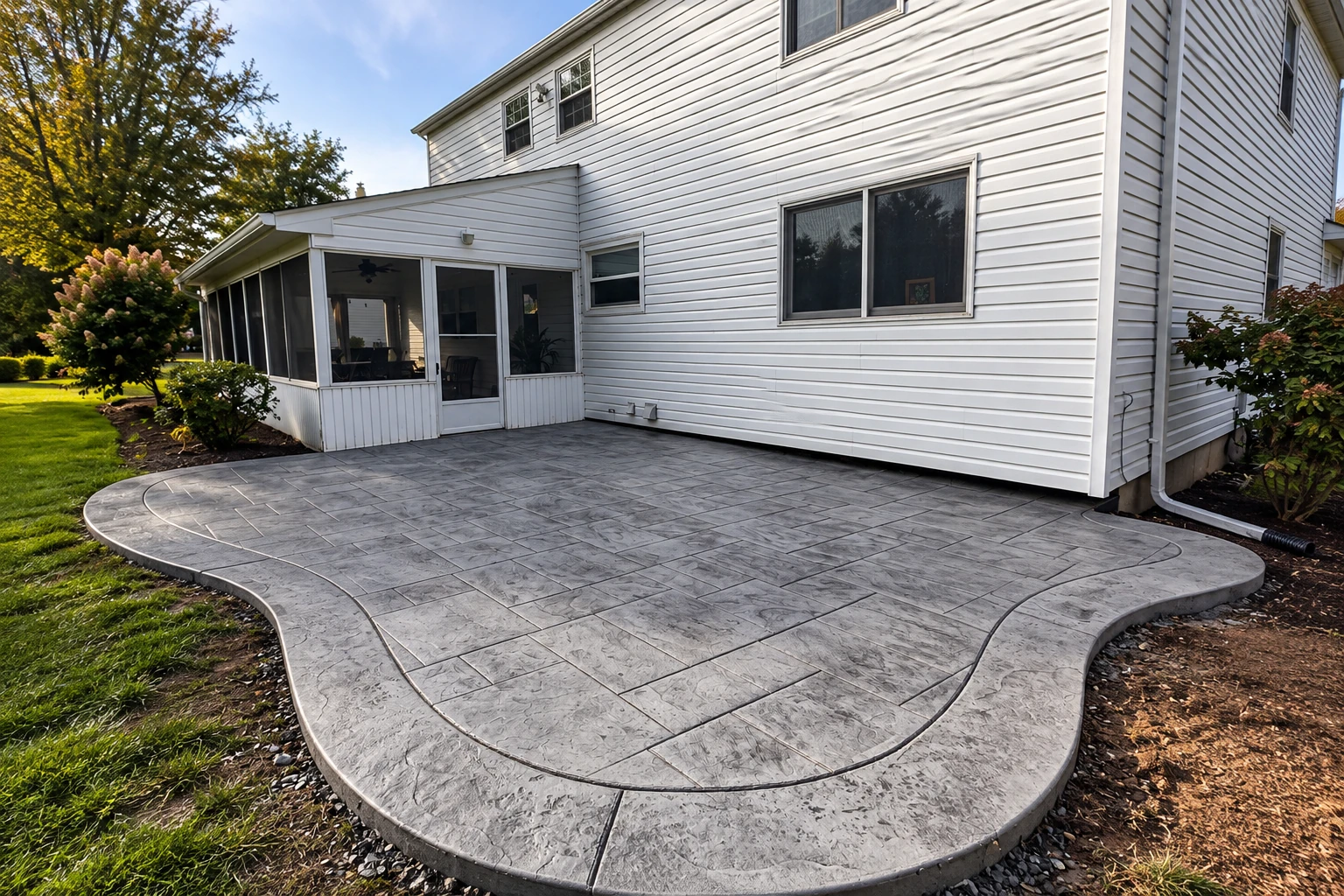
Garage floor concrete in Santa Maria is flatwork, the flat slabs we form, pour and finish on the ground. Most people call us because the old floor has cracked across, sunk in a corner or started to dust and chip. The top is what you see, but the trouble usually starts underneath, in a base that was raked level instead of dug out and packed hard.
What moves the price is garage size, how much old concrete comes out, how much soft ground we replace, and extras like a concrete retaining wall on a sloped lot. The schedule turns on tear-out, any permit and the curing, the slow hardening that has to happen before you load the floor. If the budget's tight, trim the finish, not the base, since nobody can get at the base once it's poured over. My written estimate lists each part line by line.
What our garage floor concrete work covers
- I look at every garage. I come out to look at every job myself, and our own crew does the forming, pouring and finishing. I've run this business that way since 2017.
- Soft spots dug out. We dig out any soft spots and pack the subgrade, the ground the slab sits on, hard before the pour, since a floor only stays flat if that does.
- Joints and a broom finish. We cut control joints, grooves that give the slab a planned place to crack, and leave a broom finish, a light texture so shoes and tires grip.
- Curing started right away. We start curing as soon as finishing is done and keep the top from drying out too fast, so the floor stays tough instead of turning dusty.
- Licensed and insured. We're licensed and insured, and I'm glad to show you both when I come out to measure, before you decide anything.
What goes wrong with garage floors
| Problem | What it looks like | Usual fix |
|---|---|---|
| Cracks across the floor | What it looks like: Cracks wander across the slab and keep getting wider | Usual fix: New slab with joints cut on time |
| Sunken or tilted slab | What it looks like: A corner or the middle sits low and water pools there | Usual fix: Dig out soft base, pack it and pour back |
| Dusty, chipping surface | What it looks like: The top powders, flakes or chips under tires and tools | Usual fix: New floor finished at the right time, then cured |
| Water running inward | What it looks like: Rain runs back into the garage toward the house door | Usual fix: Reset the grade so the floor sheds water outward |
Patch, partial fix or new floor
- Patch and seal. This fits when the cracks are thin and the floor is still flat, because the base is holding and only the cracks need filling.
- Cut out a section. This fits one sunken corner or broken patch, so we saw out the bad area with concrete cutting, fix the base under it and pour back in.
- Full new floor. This is the right call when the slab is cracked all over or sinking in several places, since that's a base problem. Color or a pattern can go on top as decorative concrete.
How a garage floor job runs
- Call or send the form. Call or use the form, and we get back to you to set a time for me to come see the garage.
- I look and measure. I measure, check the old slab, the ground and how the truck gets in, then send a written estimate that lists each part of the job.
- Permit and forms. Once you say go, we take care of any permit work, set the forms and look them over with you before anything gets poured.
- Pour, finish and cure. Our crew pours, finishes and cures the floor right, then we clean up the site before we leave.
Keeping a garage floor sound after we leave
Once we're gone, the floor does best when you give it a light first week, as the questions below cover, and keep water running out the door instead of sitting in low spots. Wipe up oil and chemical spills before they soak in. If a crack shows up, call me and I'll tell you straight whether it matters.
We're based in Santa Maria and work across the valley and the cities around it, from southern San Luis Obispo County through Orcutt down to Lompoc and Buellton. If your garage floor is cracked, sunken or worn out, call or use the form to ask for an estimate.
Tell us about your garage floor
Send your garage's size, how the old floor looks and a few photos. We reply within one business day to set a time for me to come out, with no obligation.
(805) 268-7763- Free estimate at your property
- Each part listed line by line
- Straight talk on repair or replace
Garage floor questions we hear
How much does a new concrete garage floor cost in California?
A standard concrete slab in California, installed with materials, labor and a basic broom finish, usually runs about $9 to $18 per square foot. That's the going market price, not ours, and tear-out, base repair or a decorative finish on top raise it. My written estimate shows your figure, line by line.
Why do concrete garage floors crack?
Most cracks come from how the slab was built, like missing or poor joints, a weak base, too much water at the pour, poor finishing and little or no curing. Slab guidance says curing should start right away, with a sprayed curing compound or damp burlap kept moist for at least 3 days. It's the step I'd ask any bidder about.
How soon can I walk on a new concrete garage floor?
One regional cost guide says a new slab should be walkable within 48 hours, and it suggests waiting about a week before heavier loads. The same guide puts full curing at 28 to 30 days. Plan on light use only for that first week, and I'll go over your timing when I come out.
Do I need a permit for a garage floor in Santa Maria?
The City of Santa Maria Building Division is the place to ask, since it checks that any ongoing construction project has the required permits and follows the approved plans. Its counter at 110 S. Pine St., Room 101, gives permit fee estimates. If your job needs a permit, we handle it, as our steps above lay out.
Does a concrete contractor need a license in California?
In most cases, yes. California lets someone work without a license only on jobs under $1,000 that need no permit, and only when they employ no one, which rules out nearly any garage floor done with a crew. The state licensing board describes a concrete contractor as one who forms, pours, places and finishes flat concrete, so ask every bidder for theirs.