Concrete Retaining Walls in Santa Maria CA - A wall that drains and holds the slope
Soil slumping off a slope or an old wall starting to lean? We pour walls with the drain built in, so the ground stays put.
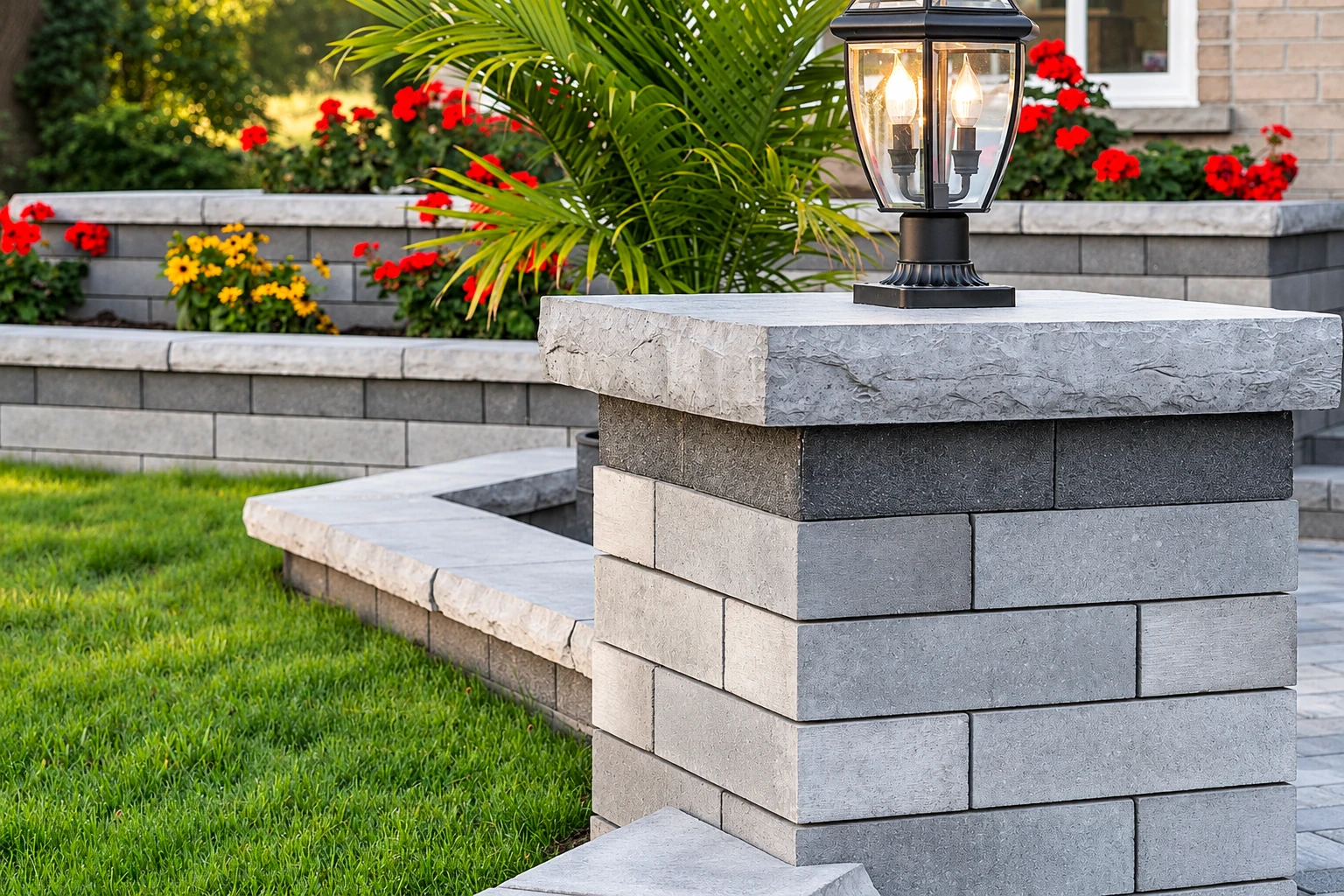
A concrete retaining wall holds back the sideways push of soil on a slope, so the ground behind it stays where it is. Most calls we get about concrete retaining walls in Santa Maria, CA start with something you can see, like dirt washing onto a patio, an old wall tipping out at the top, or a slope you want cut back for a pool deck or a shop with a concrete floor.
We build the drain into the wall from the start and show it in the price, because water trapped behind a wall is what pushes it over. Height, length, digging, steel and how easy it is to get in move the price. The schedule turns on the design, any permit review and the cure, the wait while the concrete hardens before soil goes back. Your estimate shows each of those.
What goes into our concrete retaining walls
- Sized to what's above it. Height alone doesn't size a wall. Groundwater, a driveway or house above, the slope and earthquakes all add load, so the footing, steel and depth come from the design.
- Steel checked before the pour. Rebar, the steel bars inside that carry the pull concrete can't take on its own, goes in to the design's layout, and I check it against the plan before any concrete arrives.
- Same owner since 2017. I've run this business since 2017, and I still come out to look at every job myself. Our own crew does the forming, pouring and finishing.
- Licensed and insured. We're licensed and insured. In California, the state licensing board's concrete contractor class is the one that covers forming, pouring and finishing concrete, so it's worth asking any bidder about their license.
Signs your retaining wall is failing
| Problem | What it looks like | Usual fix |
|---|---|---|
| Wall leaning out | What it looks like: The top tips forward and gaps open where it meets the ground | Usual fix: Find the water source, then rebuild with a working drain |
| Wet face, dry outlets | What it looks like: Damp patches or white crust on the face, nothing draining below | Usual fix: Clear or replace the drain behind the wall |
| Cracks through the face | What it looks like: Cracks running up the wall, wider at the top than the bottom | Usual fix: Patch it if stable, rebuild it if it's moving |
| Soil spilling over | What it looks like: Mud and dirt washing over the top onto the patio or path | Usual fix: Raise the wall and send surface water away from it |
Fix the wall or build new
- Clear the drain. Suits a wall that's still straight but stays damp, because getting the water out is sometimes all it needs, and I'll tell you if that's the case.
- Rebuild one section. Suits a wall where one stretch has tipped or cracked through while the rest stands true, so we cut that part out and pour it back with a drain behind it.
- Pour a new wall. Suits a wall that leans along its length, one built with no drain, or a new slope, because the footing, steel and drain all have to start from scratch.
How we plan and build your wall
- Site visit. You call or send the form, and I come out to measure, look at the ground and see how we'll get equipment to the slope.
- Written estimate. You get a written estimate that lists each part, the digging, forms, steel, drain and concrete, so nothing's buried in one number.
- Permit and forms. If the wall needs a permit, we handle the application with the city or county office and set up inspections, then walk the forms with you.
- Pour, cure and backfill. Before we pour, I'll ask where your sprinklers and downspouts empty. Then we pour, let it cure, and only then put soil back and clean up.
What keeps a retaining wall standing
A wall stays sound as long as water can get out. Keep the drain outlets at the base clear, and think before adding sprinklers above it, aiming a downspout at the soil behind it or regrading so water pools there, since any of those can overload a wall that drained fine when it was built.
We're based in Santa Maria and work across the Santa Maria Valley and the cities around it, from southern San Luis Obispo County down to Lompoc and Buellton, including Orcutt and Nipomo. Call (805) 268-7763 or send the estimate form for a free estimate.
Tell us about your slope
Send photos of the slope and tell us where nearby downspouts and sprinklers drain. We reply within one business day to set a time to see it.
(805) 268-7763- Free estimate at your property
- Each part priced line by line
- No obligation to go ahead
Retaining wall questions we hear
How much does a concrete retaining wall cost in Santa Maria?
A poured concrete retaining wall in the Santa Barbara area usually costs about $35 to $50 per square foot of wall face, the side you see. Height, length, digging, steel and the drain move where yours lands. Our estimate lists each part so you can see where the money goes.
Should I build a poured concrete or block retaining wall?
Poured concrete is the better pick when tight access leaves room only for a slender wall, when the wall doubles as a foundation, or when you want a face with no joints. Block usually costs less at landscape heights, and its joints flex where a rigid poured wall can crack with small ground movement.
How long does a concrete retaining wall last?
A poured wall built right usually lasts decades, and so does a well-built block wall. The drain decides its life more than the material does, because a wall without a working drain takes the full push of soaked soil. That's why ours goes in from the start.
Who reviews retaining wall permit plans in Santa Maria?
The city's Building and Safety Division reviews and approves building permit plans in Santa Maria. The city's permit staff can give you a fee estimate, the plan check deposit, general timelines and how many sets of plans are needed.